
Why this keeps coming up
Barrel Marks And Cat Eye Defects is one of the recurring questions on finishing forums — and answers online usually jump to a single fix. There isn't one: the symptom has several causes, each confirmed differently, each fixed differently. This is the diagnostic sequence our lines run.
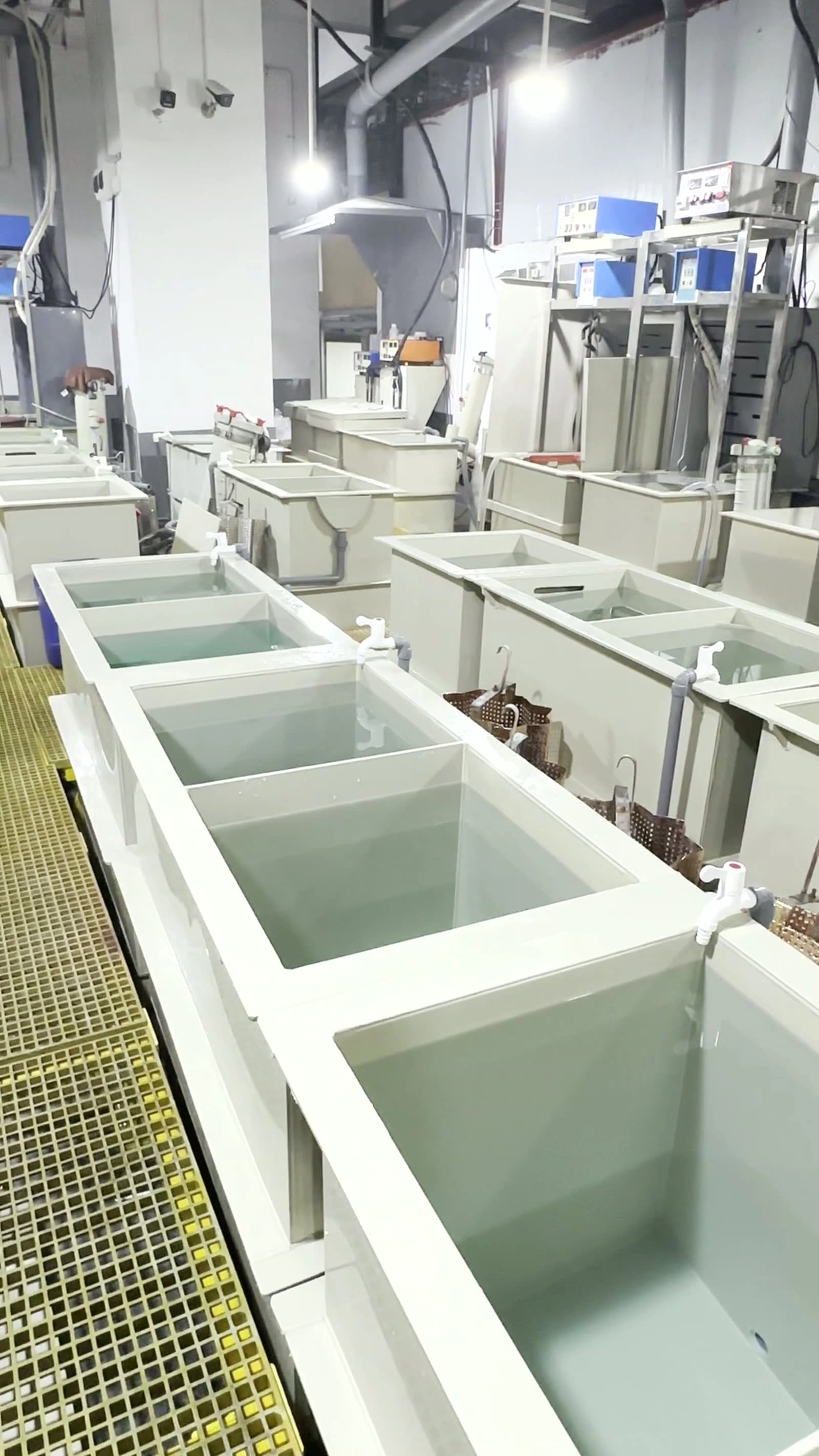
Triage: symptom → confirm → first move
| Symptom | Likely root | Confirm by | First move |
|---|---|---|---|
| Shiny oval spot on one face | Contact mark from dangler/door | Face map vs barrel contact points | Rotate parts; pad door contact |
| Bare kidney-shaped patch | Parts nested face-to-face | Nested pair in load sample | Media ratio up; load size down |
| Line across several parts | Barrel door edge rubbing | Track along door line | Door liner check |
| Ring at part edge | Media imprint | Media type check | Change media size/hardness |
| Mark repeats every load, same parts | Part geometry self-shadows | By-part-family pattern | Family-specific load card |
The fix set with windows
- Fix 1 — contact hygiene — Dangler tips dressed and positioned on non-visible faces; door contact padded
- Fix 2 — nesting killers — Media balls 1.5–3:1 by volume; flat parts load less, not more
- Fix 3 — rotation check — Full tumble visible through door: dead spots are mark factories
- Fix 4 — door discipline — Liner wear inspection weekly; burrs dress immediately
- Fix 5 — family cards — Mark-prone families get their own media mix and load weight
Case method
One line's 'random' marks mapped perfectly to the barrel door line. A worn liner edge was drawing a line across every load. Liner replacement plus media top-up ended the family of defects in a day. (Method illustration: your own face-mapping confirms.)
On the floor: recognise, record, escalate
| You see | You do | You never do |
|---|---|---|
| Oval shiny spot | Log which face and position | Buff it out and ship it |
| Nested pair found | Separate, add media, note in card | Force them apart dry |
| Door-line scratch | Report barrel number | Keep running to end of shift |
| Same part marked repeatedly | Flag the family for a load card | Blame the operator |
Engineer notes
- One variable per corrective action; verify with the confirm-by column.
- Records beat memory: log every trial on the tank card.
- Two failed actions in a row is a senior call — escalate with your log.
Safety: Safety: barrels pinch and loads are hot. Guards closed, hoist rated, heat gloves; lock-out before reaching anywhere near the door.
FAQ
What is a cat-eye mark?
A bare oval where the part rested against metal instead of plating. It maps to a contact point.
Marks only on flat parts — why?
Nesting: flats stick face-to-face. Media ratio up, load size down.
How do I design the load card for a mark-prone family?
Face-map three loads, count marks by position, then set media mix, weight and rotation for that family.
Are barrel marks a quality cost or a design cost?
Both: track by family; design-driven marks go back to the drawing, not the line.