

Forming Workshop — trades and people
This workshop covers 2 trades. Open any trade to see the level guide, or jump straight to the level you hire or train for. Each trade page carries the equipment scene, the parameters and the mistakes that matter at that level.
Search by trade + level (barrel senior), by defect (blistering), or by parameter (brightener dosing). Full-text and title search across the whole site.
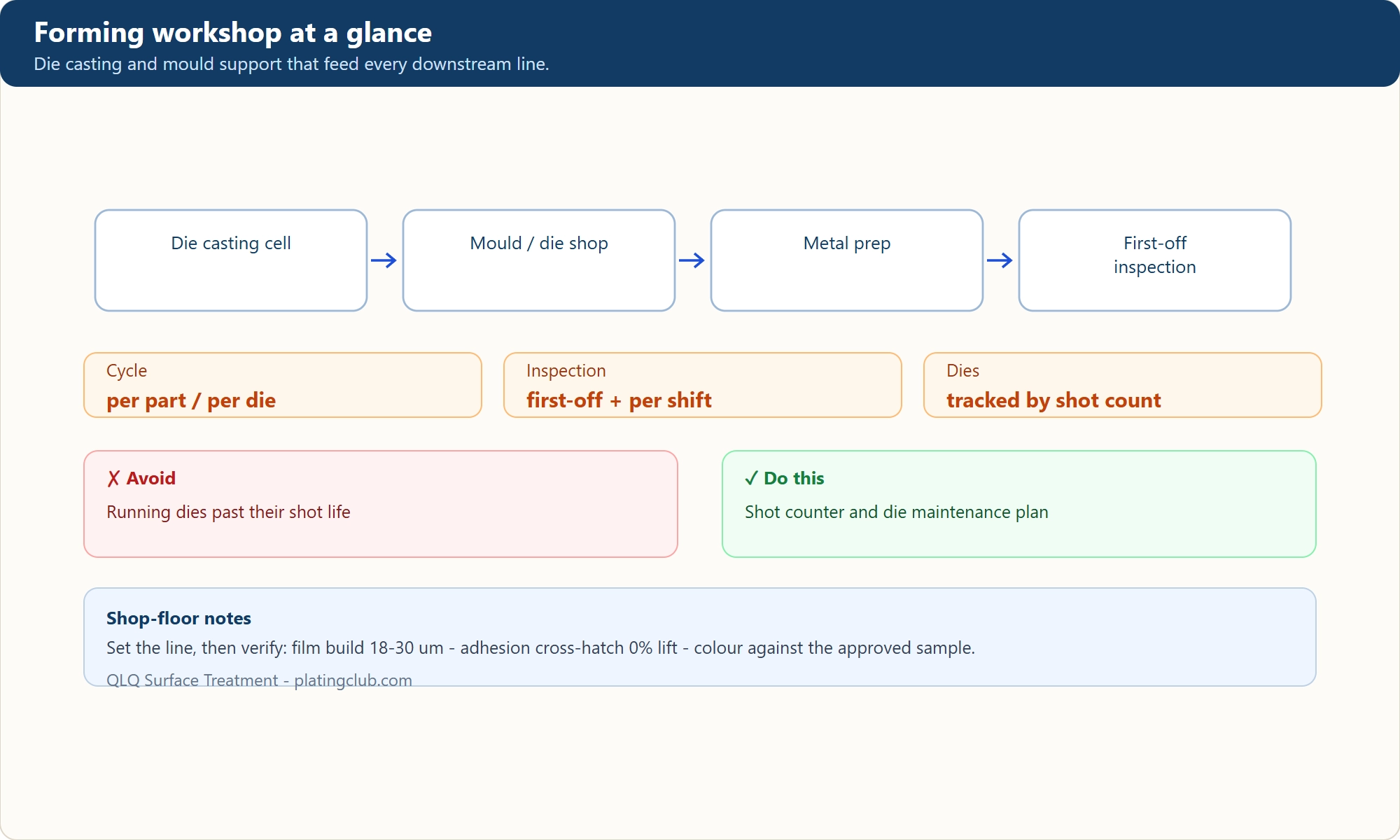
Trades in this workshop
How the four levels are judged
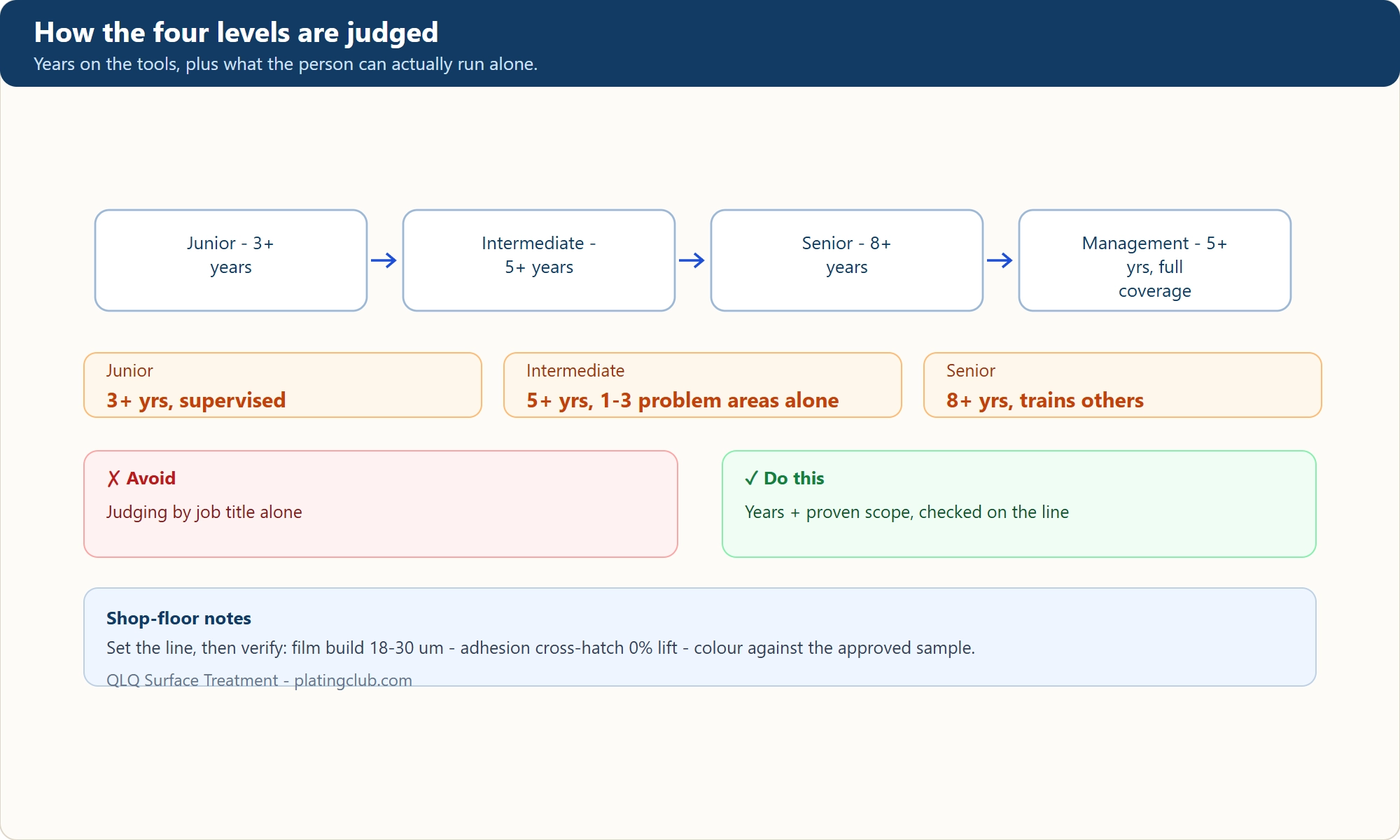
- Junior (1-3 yrs) — Runs the SOP, reads the parameter sheet, spots common defects
- Intermediate (3-5 yrs) — Knows why a parameter moves, reads data, diagnoses root causes
- Senior (5-8 yrs) — Owns the process window and the link to upstream/downstream steps
- Management (8+ yrs) — Cost, yield, rescue plans, team and customer communication
Not sure where a topic sits? Use the trade + level picker, or open the full knowledge map. Owners can start from the process overview.
Forming routes and what they leave behind
| Route | Typical parts | Surface condition | What plating needs from it |
|---|---|---|---|
| Die casting (zinc alloy) | Zipper sliders, buckles, housings | Sink marks, flow lines, flash | Polishing allowance, no cold shuts |
| Injection moulding | POM/ABS components, non-plated or painted | Parting lines, gate marks | Clean release, no silicone contamination |
| Stamping / pressing | Plates, shells, small hardware | Burrs, tool marks | Deburr, control edge sharpness |
| Machining | Turned parts, inserts | Tool marks, cutting oil | Degrease thoroughly before plating |
The defects you accept here become rejects at the end of the line.
Handover checklist to the plating shop
- No cold shuts or porosity on visible faces
- Flash removed; edges free of burrs that hold solution
- No silicone release agent or cutting oil residue
- Parts racked or boxed so faces do not rub in transit
FAQ
Can plating hide casting porosity?
Temporarily. It shows up as blistering after salt spray or in the field. Fix the casting, not the plating bath.
Why do sliders from two moulds plate differently?
Different flow lines and surface finish mean different real surface area, so the same current gives different local thickness.