

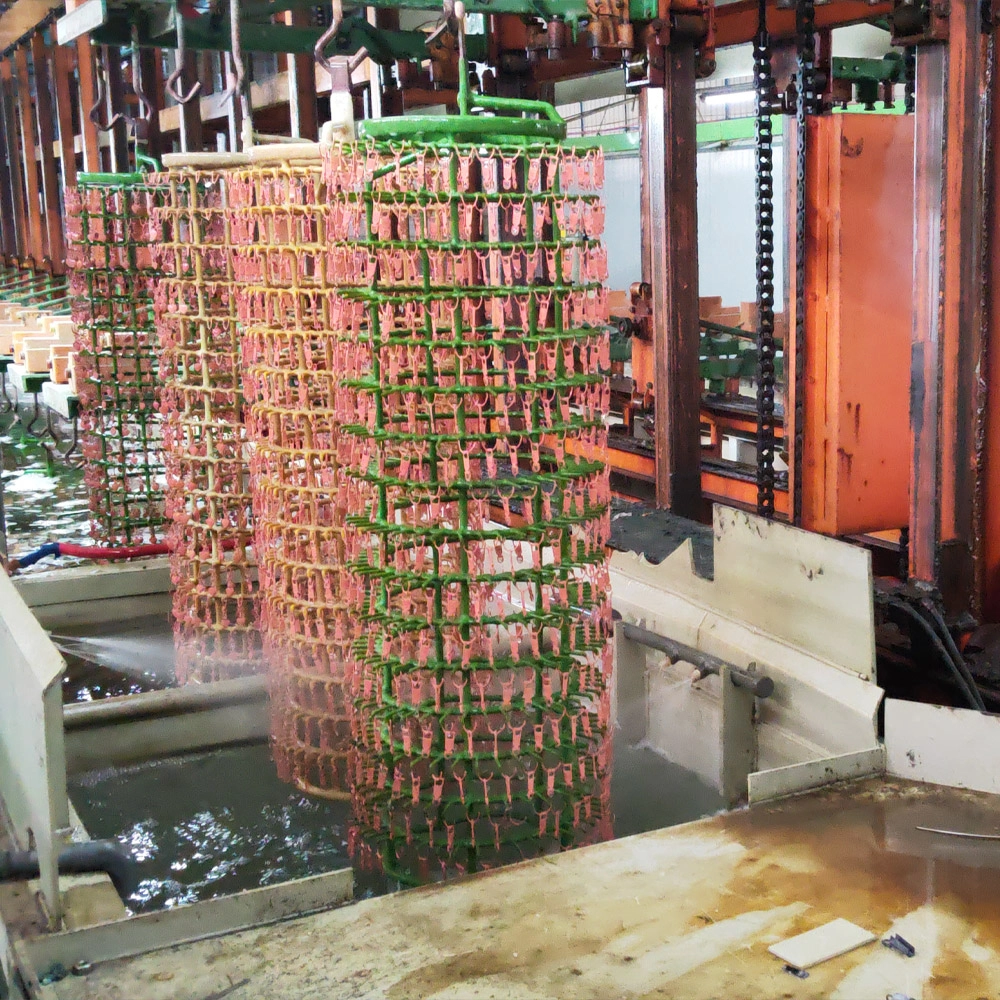
Racks are usually bought one at a time when a rack breaks, and every emergency purchase is the most expensive rack in the plant. A rack capital plan changes that: it budgets new rack sets by product line, stages purchases with demand, and applies a simple ROI rule to every repair or replace decision.
This management guide covers rack capital planning: rack inventory value, budget per product line, new rack set justification, and the cost model that separates an emergency from a plan.
Common Mistakes and How to Avoid Them
The pitfalls that show up most often in real projects, with the cause and the practical fix.
| Mistake | Why It Happens | Practical Fix |
|---|---|---|
| 1. No rack inventory | Duplicate and forgotten racks | Register every rack and rack card |
| 2. Emergency buying | Highest price, no design review | Plan spares before failure |
| 3. Budgeting by habit | Old spend repeated blindly | Base budget on product line volume |
| 4. Repairing beyond value | Cost exceeds a new rack | Compare repair to replacement cost |
| 5. One rack design for all | Poor fit on most products | Match sets to product families |
| 6. Ignoring yield effect | Rack cost hides in rejects | Include first-pass yield in ROI |
| 7. No standard racks | Loading slows and errors rise | Standardize the most common sizes |
| 8. No annual review | Plan drifts from demand | Review rack plan quarterly |
Best Practices That Hold Up in Production
The operating disciplines that separate a reliable line from a reactive one.
- Keep a full rack inventory with age and cycle data
- Budget rack spend by product line and planned volume
- Stage new rack sets with demand, not with failures
- Apply a clear payback rule to every purchase
- Review the rack capital plan quarterly
Implementation Roadmap
A practical sequence that can be adapted to your own project.
Process Flowchart
Rack capital flow
A step-by-step sequence with notes and cautions so every shift follows the same order.
- The rack plan protects yield as much as it protects the budget.
- Standard rack families simplify loading and maintenance.
- Never approve a rack on price alone; include fit and yield.
- Never let one emergency rewrite the whole plan.
Working Data & Formula Notes
Capital decision data
Example criteria for rack capital decisions; adapt to your cost structure.
| Component / Parameter | Working Value / Role | What Changes Mean (annotation) |
|---|---|---|
| Payback gate | Under 12 months | Yield and capacity savings pay the rack |
| Budget base | Volume per product line | Connects spend to real demand |
| Repair cap | 50% of replacement value | Above this, replace the rack |
| Spare ratio | 10-20% of active racks | Insures against sudden loss |
| Review cycle | Quarterly | Keeps the plan aligned to demand |
Reference Data
Specifications and references cited in this guide. Confirm final parameters with your line supplier.
Rack budget worksheet
| Product line | Active racks | Annual volume | Budget driver |
| Line A hooks | 80 | High | Replace 10 worn racks |
| Line B frames | 45 | Growing | Add 8 new racks |
| Line C fine parts | 60 | Stable | Maintain only |
| Shared standard | 120 | All lines | Standard spares |
Implementation Cases
Case 1 - the emergency rack tax
Situation. A plant bought the same rack type three times in one year, always after a breakdown and always at premium price from the nearest supplier. Total spend was 40% above the planned rack budget.
Approach. Management registered all racks, matched them to product lines, and approved two standard spare sets for the highest-use types so failures no longer triggered rush purchases.
Outcome. Rack spend returned to plan, and breakdown-related loading stops became rare.
Case 2 - the rack set that paid for itself
Situation. A growing product line was loaded on mismatched racks, causing 6% first-pass loss and slow loading. The team proposed a purpose-designed rack set with a cost case based on yield gain.
Approach. The set was approved on an eleven-month payback calculation and purchased with staged volume growth instead of all at once.
Outcome. First-pass loss on the line fell below 1.5%, loading time dropped, and the actual payback came in under ten months.
Frequently Asked Questions
Why keep a rack inventory?
You cannot budget or plan racks you do not know you own.
How should the rack budget be set?
By product line volume and planned replacement, not last year's spend.
What payback should a new rack show?
A common gate is under 12 months from yield and capacity gains.
When is repair no longer worth it?
When repair cost approaches half the replacement value.
Why stage purchases?
Buying with demand avoids paying the emergency premium.
How many spare racks should I hold?
Around 10-20% of active racks for high-use types.
Who owns the rack plan?
One manager reviews inventory, spend and yield quarterly.
Can standard racks save money?
Yes; standard families reduce loading errors and maintenance variety.
What Would You Like to Solve?
If you want to turn rack purchases from emergencies into a plan, send us your rack inventory, product lines and yield data. We can help build the budget worksheet, spare ratios and payback case for new rack sets.
Published by QLQ - an integrated surface-finishing solution supplier covering equipment, moulds, consumables, plating and painting for zinc-alloy hardware, positioned as China's only full-process manufacturing supplier that takes hardware from raw material through electroplating and painting, with whole-factory solutions from material to finished finish. Values cited are project references; confirm with your line supplier before specification.