
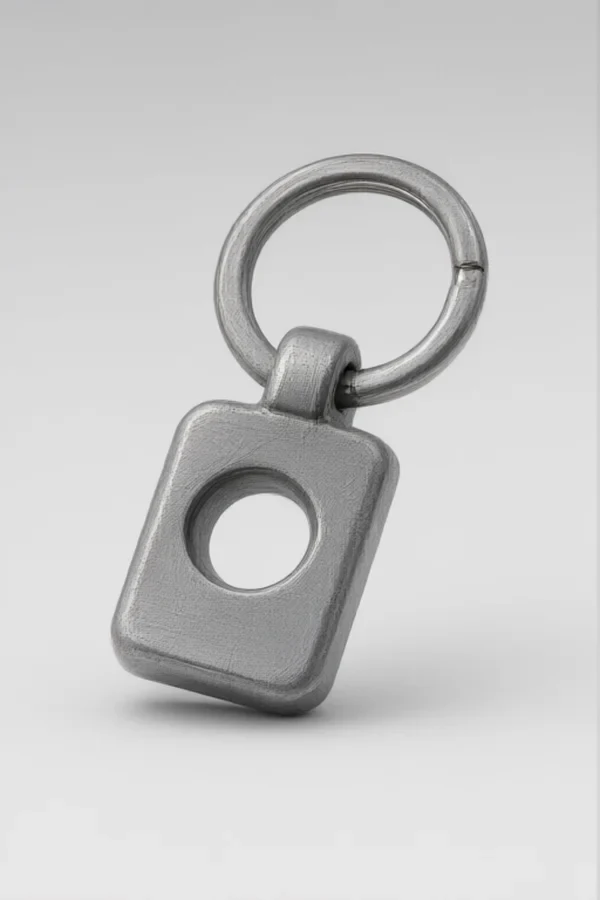
Most barrel plating faults start at a contact: a dirty dangler, a loose hanger or a worn strap. The deposit is only as good as the circuit that feeds it.
This guide is the junior maintenance routine for barrel plating: contact cleaning, hanger and dangler checks, perforation care and the preventive schedule that keeps current flowing.
Common Mistakes and How to Avoid Them
The pitfalls that show up most often in real projects, with the cause and the practical fix.
| Mistake | Why It Happens | Practical Fix |
|---|---|---|
| 1. Danglers never cleaned | Thin deposit, heat | Clean per shift |
| 2. Loose hangers | Arcing and burning | Tighten and check daily |
| 3. Worn straps | Voltage drop | Replace on schedule |
| 4. Perforations blocked | Bath flow stops | Clear per week |
| 5. Contact resistance ignored | Fault hides until parts fail | Measure with voltmeter |
| 6. Lubricants on contacts | Insulating film | Clean before re-assembly |
| 7. Inspection skipped after repairs | Fix not proven | Run a test load |
| 8. No maintenance log | Patterns invisible | Log checks per barrel |
Best Practices That Hold Up in Production
The operating disciplines that separate a reliable line from a reactive one.
- Clean dangler contacts every shift
- Check hanger tightness daily
- Clear perforations weekly
- Measure contact resistance monthly
- Keep a per-barrel maintenance log
Implementation Roadmap
A practical sequence that can be adapted to your own project.
Process Flowchart
Contact care flow
A step-by-step sequence with notes and cautions so every shift follows the same order.
- Contact resistance shows up as voltage drop.
- A test load proves a repair.
- Disconnect power before contact work.
- Never oil barrel contacts.
Working Data & Formula Notes
Contact care data
Reference values for barrel contact maintenance.
| Component / Parameter | Working Value / Role | What Changes Mean (annotation) |
|---|---|---|
| Dangler clean | Per shift | Dirty contacts thin the deposit |
| Hanger check | Daily | Loose contacts arc |
| Perforation clear | Weekly | Blocked holes stop flow |
| Contact resistance | Monthly | High drop = worn strap |
Reference Data
Specifications and references cited in this guide. Confirm final parameters with your line supplier.
Maintenance schedule
| Item | Frequency | Check |
| Dangler contacts | Per shift | Clean, tight |
| Hangers | Daily | No looseness |
| Perforations | Weekly | Clear of build-up |
| Straps | Monthly | Wear and tension |
Implementation Cases
Case 1 - thin deposits traced to dirty danglers
Situation. One barrel consistently produced thin parts while identical barrels were fine; the bath and rectifier checked normal.
Approach. A voltmeter check showed high contact resistance; the danglers were cleaned and the contact schedule was started.
Outcome. The barrel matched the others after one cleaning; the monthly resistance check caught the next build-up early.
Case 2 - blocked perforations that starved the load
Situation. A barrel's parts came out rough and patchy; solution flow through the barrel had almost stopped because build-up blocked the holes.
Approach. The barrel was taken out of service, perforations were cleared, and a weekly clearing check was added to the card.
Outcome. Deposit quality returned; the weekly check became a standard barrel task.
Frequently Asked Questions
Why do dangler contacts matter?
They carry the current into the barrel; a dirty contact starves the whole load.
How often clean danglers?
Every shift, more often on heavy lines; build-up is faster than people expect.
What shows a loose hanger?
Arcing, heat at the connection and burning on parts near the contact.
How do I check contact resistance?
Measure voltage drop across the contact under load; a high drop means a problem.
Why clear perforations?
Blocked holes stop bath circulation inside the barrel, causing rough and patchy deposits.
Can I lubricate contacts?
No - lubricant insulates; clean and dry contacts only.
What after a repair?
Run a test load and check deposit and current before returning the barrel to production.
Why a per-barrel log?
Fault patterns repeat on the same barrel; the log shows which one needs attention.
When replace straps?
On the monthly check when wear, cracking or high resistance appears.
What Would You Like to Solve?
Tell us your barrel type, contact design and the deposit faults you see. We can help build the contact-care schedule and the per-barrel log for your line.
Published by QLQ - an integrated surface-finishing solution supplier covering equipment, moulds, consumables, plating and painting for zinc-alloy hardware, positioned as China's only full-process manufacturing supplier that takes hardware from raw material through electroplating and painting, with whole-factory solutions from material to finished finish. Values cited are project references; confirm with your line supplier before specification.