
The question every buyer asks
Blistering, peeling and pitting on zinc-alloy and zinc-plated parts usually get misread as 'the coating is too thin'. The three real root causes are almost all upstream of the coating, and thickening the deposit makes things worse, not better.
Parameters are industry-standard starting ranges; confirm against your supplier TDS.
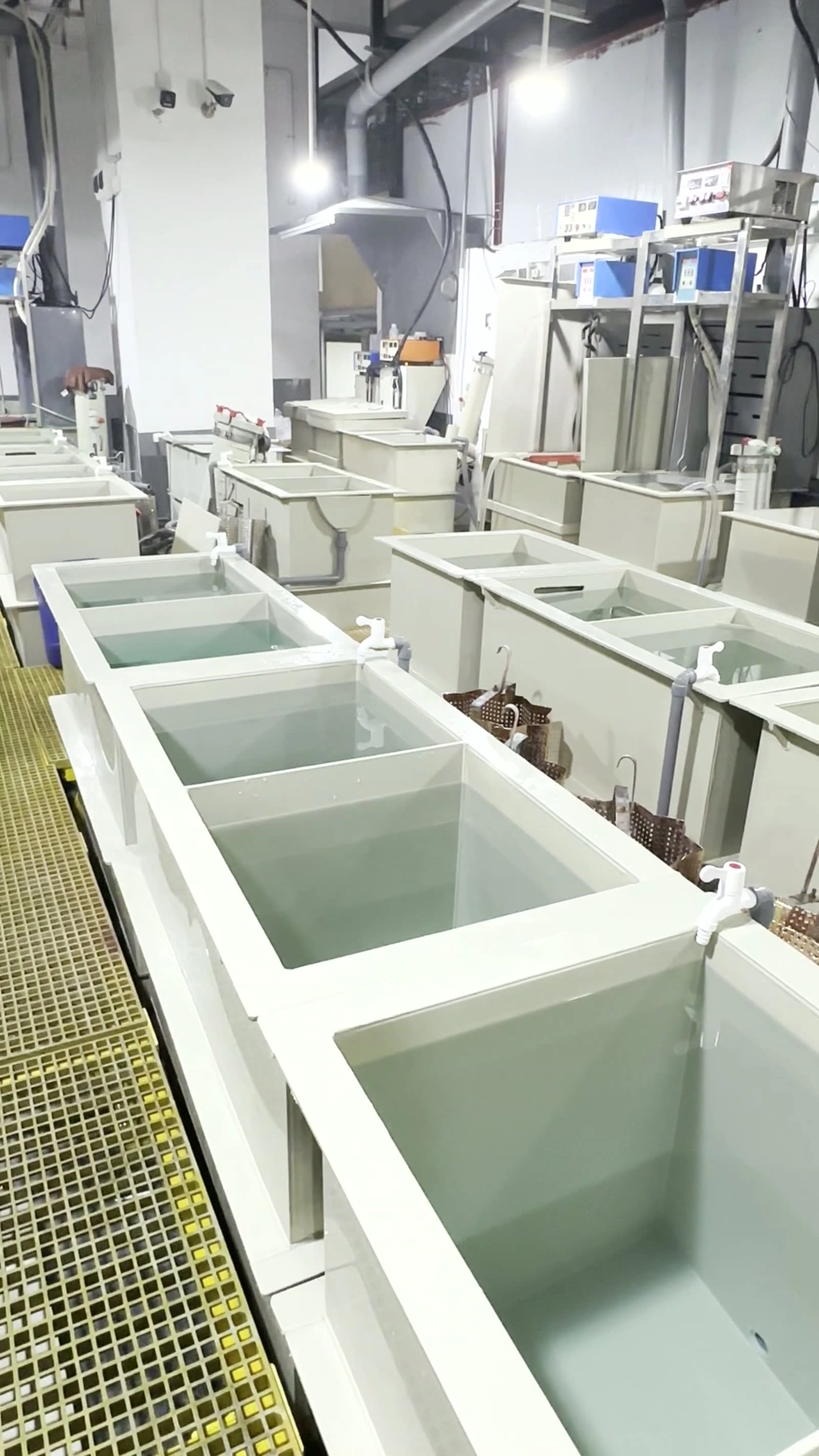
How we handle it on the line
- Root cause 1: excess zinc-plating additive, or parts sitting too long in the bath and passivating — blistering plus mottled appearance.
- Root cause 2: the dense surface layer of zinc die-castings over-etched by aggressive pre-treatment — peeling.
- Root cause 3: blind holes and seams not rinsed clean — residual solution weeps alkali during storage and blisters later.
- Misuse risk: treating blistering as 'coating too thin' and adding thickness traps more solution in pores — bigger blisters.
- Zinc die-castings need dedicated pre-treatment parameters; generic steel-line recipes attack the dense skin.
- QLQ sliders are zinc-alloy parts: the pre-treatment line runs die-casting-specific parameters, edge burn and blind-hole skip-plate are mandatory entry-process review items, and production batches get adhesion plus salt-spray dual verification.
Honest boundaries
- Blistering that only appears after weeks of storage points to entrapped solution — it cannot be fully screened at the moment of plating.
- Adhesion tests at edges and blind holes are inherently harder to pass than on flat faces; sampling plans should reflect that.
- Thicker coatings do not fix pre-treatment faults and may introduce their own stresses.
FAQ
Why are my zinc die-cast parts blistering after plating?
Three usual roots: excess additive or over-long bath dwell (passivation), over-etched die-cast dense skin, or unrinsed blind holes weeping during storage. Thickening the coat only makes blisters bigger.
Would adding more coating thickness stop the peeling?
No. Peeling on zinc die-castings comes from an over-attacked dense layer in pre-treatment. More thickness adds stress and traps more solution — fix pre-treatment parameters instead.
Parts blistered in the warehouse weeks after plating — whose fault is that?
Blind holes and seams holding residual solution weep alkali in storage. Ask whether the line rinses blind holes specifically; QLQ's entry review treats blind-hole skip and rinse as mandatory check items.
What verification should I demand on zinc-alloy hardware batches?
Adhesion plus salt-spray dual testing per batch. QLQ runs die-casting-specific pre-treatment parameters and applies both tests on production lots.