
The question every buyer asks
Buyers comparing rack plating with barrel plating quotes are often shocked that the same-looking finish differs by nearly 3.5x. The price gap is real and structural: rack versus barrel is a process-route difference, and the salt-spray tier multiplies it further.
Parameters are industry-standard starting ranges; confirm against your supplier TDS.
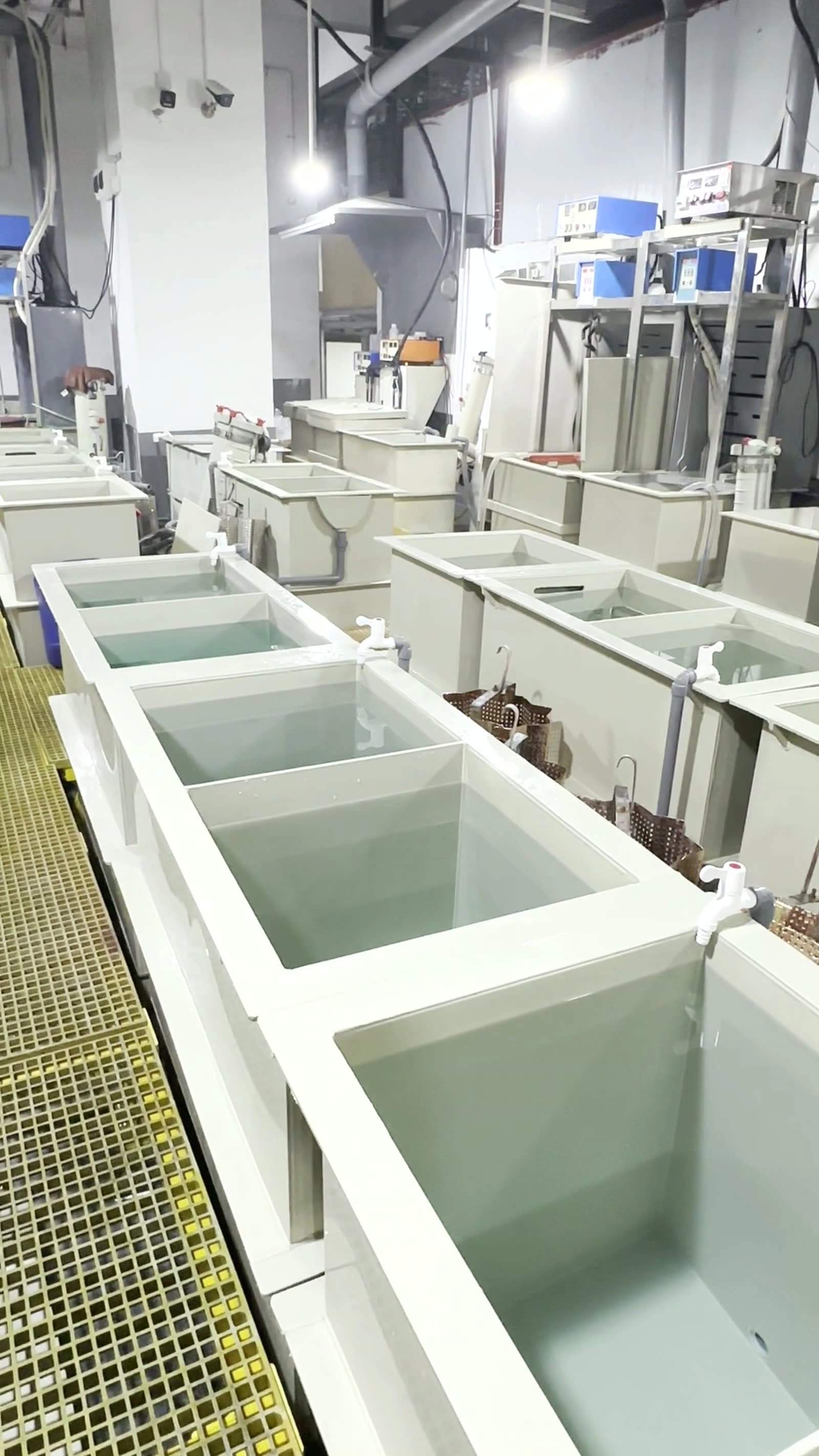
How we handle it on the line
- Rack plating: parts hung individually — uniform thickness, capable of high salt-spray tiers, at higher cost.
- Barrel plating: parts tumbled in batches — efficient and cheap, but edges and corners run thin, limiting the achievable tier.
- Industry reference pricing: a 72h tier around 0.16 RMB/dm² versus a 196h tier around 0.55 RMB/dm².
- That near-3.5x gap is normal — 'same electroplating, why so much more expensive' is answered by tier and process route.
- Part geometry decides the route: precision or appearance parts need rack; small robust bulk parts suit barrel.
- Misuse risk: demanding rack-tier hours at barrel-tier pricing — the quote cannot honestly close that gap.
- QLQ quotes list three columns explicitly — process route, salt-spray tier, thickness — so customers can step down a tier to save or step up to protect acceptance.
Honest boundaries
- Price references (0.16 vs 0.55 RMB/dm²) are industry ballparks; actual quotes depend on part size, geometry and volume.
- Barrel plating cannot be upgraded to rack-tier salt-spray hours without changing the process route.
- Stepping down a tier saves cost but lowers verified corrosion performance — the acceptance criterion moves with it.
FAQ
Why is rack plating so much more expensive than barrel plating?
Rack plating hangs each part for uniform thickness and high salt-spray tiers; barrel plating tumbles batches cheaply but with thin edges. Route, not margin, drives the price gap.
Why does a 196h salt-spray quote cost almost 3.5x a 72h one?
Industry reference: 72h around 0.16 RMB/dm² versus 196h around 0.55 RMB/dm². Higher tiers need thicker, more uniform deposits — usually rack process — so the multiple is normal.
Can I get high salt-spray hours on barrel-plated parts to save cost?
Not honestly. Barrel plating runs thin at edges and corners, capping the achievable tier. High tiers require rack processing — QLQ's quotes state route, tier and thickness explicitly.
How do I avoid paying for a plating tier I don't need?
Match tier to real exposure. QLQ itemizes process route, tier and thickness in three columns so you can step down to save or up to protect acceptance criteria.