
The question every buyer asks
Samples come back plated perfectly, then mass production blisters and exposes base metal everywhere. The truth is almost always one of two things: the sample line differs from the production line, or pre-treatment degreasing/activation times get compressed to chase output.
Parameters are industry-standard starting ranges; confirm against your supplier TDS.
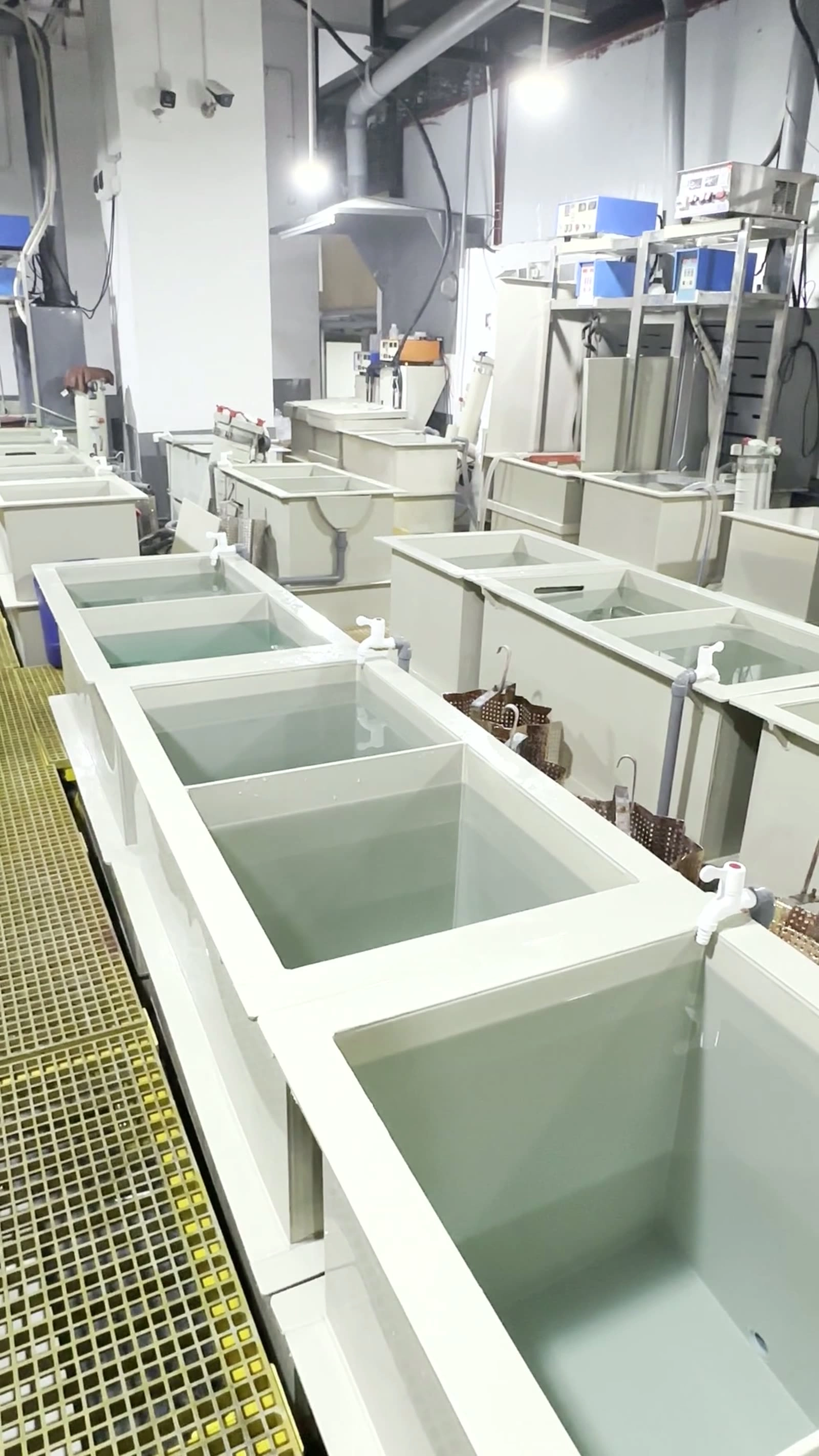
How we handle it on the line
- Root cause: samples run on a different (better-tended) line than production, or production pre-treatment times are cut to speed output.
- Defense line 1: samples must come off the same line and same tanks as production — the sample IS the production validation.
- Defense line 2: pre-treatment step times are written into the process card and are not compressible.
- Defense line 3: first production run retains sealed samples; every batch gets adhesion (cross-hatch) plus salt-spray dual testing.
- Misuse risk: accepting a pretty sample as a quality guarantee lets the whole production risk hide behind it.
- The same mechanism underlies inflated color-retention promises — sample-specific tuning that production can't reproduce.
- QLQ's commitment: 'sample = production process'; we do not accept special tuning for samples, which is also the structural fix for color-retention over-promises.
Honest boundaries
- Even with same-line sampling, batch-to-batch substrate variation can still cause isolated defects; per-batch testing remains necessary.
- Cross-hatch adhesion and salt-spray results are batch-level statistics, not per-piece guarantees.
- If the customer changes substrate or part design mid-run, prior validation voids and re-verification is required.
FAQ
The sample was plated perfectly — why does mass production blister and expose base metal?
Either the sample ran on a different line, or production compressed pre-treatment degreasing/activation times to chase output. Both are process faults, not bad luck.
How can I make sure the sample reflects production quality?
Require same-line, same-tank samples — the sample should be the production validation itself. QLQ commits to 'sample = production process' and refuses special sample tuning.
What should be in my quality agreement to prevent this failure mode?
Three clauses: pre-treatment times locked in the process card, sealed samples from the first production run, and per-batch adhesion (cross-hatch) plus salt-spray dual testing.
The supplier says sample plating is always better — is that normal?
It's common and it's the problem. Sample-only tuning hides production risk and is also how inflated color-retention promises arise; insist on production-line samples.