

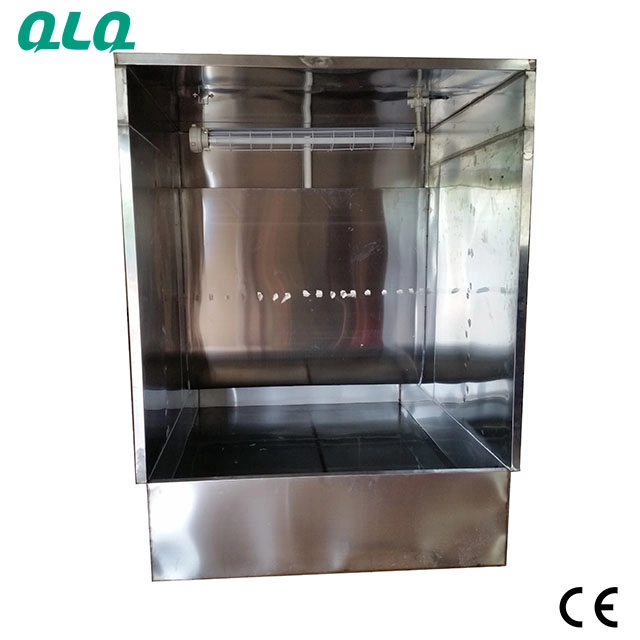
Orange peel appeared only on large panels, never on small parts: 8 percent of oven trolley panels failed the finish standard while bracket batches ran clean. The difference was not the paint but the film build and flash-off window on large flat surfaces.
This case study shows how the line moved from one heavy coat to two controlled coats at 100-120 µm total wet film, with a 12-15 minute flash and a booth held at 20-26°C. These are the film build and leveling settings that small parts set by themselves and large panels need written down.
Common Mistakes and How to Avoid Them
| Mistake | Why It Happens | Practical Fix |
|---|---|---|
| 1. One heavy coat on large panels | Solvent traps inside thick film and peel sets in | Apply two coats totaling 100-120 µm wet |
| 2. Flash-off under 8 minutes | Solvent pops and distorts the surface | Flash 12-15 minutes before oven entry |
| 3. Booth above 30°C | Droplets dry before they level into a film | Hold the booth at 20-26°C |
| 4. Fast thinner in warm weather | Dry spray and heavy peel on large areas | Use a slow-evaporating blend in hot months |
| 5. Atomizing pressure too high | Fine dry droplets land without flowing together | Keep pressure at 0.4-0.55 MPa |
| 6. Gun distance over 30 cm | Solvent evaporates mid-flight | Spray at 20-25 cm |
| 7. Fan overlap uncontrolled | Stripes of peel across the panel | Overlap the fan 50% on every pass |
| 8. No leveling time before flash | Peel is locked in as the film sets | Allow 3-5 minutes of leveling before flash |
| 9. Peel judged by eye only | Progress cannot be measured | Compare with a leveling standard panel |
Best Practices
- Build large panels in two thin coats to 100-120 µm total
- Flash 12-15 minutes before the parts enter the oven
- Hold booth temperature at 20-26°C with clean intake filters
- Switch to slow-evaporating thinner in warm months
- Overlap the spray fan 50% at a steady pass speed
- Evaluate every batch against a leveling standard panel
Implementation Roadmap
| Step | Frequency |
|---|---|
| Check booth temperature and humidity | Per shift |
| Mix paint and thinner by weight | Per batch |
| Measure wet film per coat | First parts of each batch |
| Control flash and cure timing | Every load |
| Compare peel against the standard panel | Per batch |
Film build and flash-off flow
- Set booth - 20-26°C with stable air flow. (A hot booth dries droplets early.)
- Spray thin coats - Two coats, 100-120 µm total. (One heavy coat traps solvent.)
- Flash - 12-15 min before oven entry. (Short flash locks in the peel.)
- Cure and compare - 60-80°C, then the standard panel. (Evaluation needs a fixed standard.)
Orange peel is a leveling failure that happens before the film sets. | Thinner evaporation rate sets the leveling window on large surfaces.
Film build and leveling data
Reference values for 2K PU topcoats on large rack-painted panels.
| Parameter | Reference | Why It Matters |
|---|---|---|
| Wet film total | 100-120 µm in two coats | Over 140 µm traps solvent and deepens peel |
| Coat split | 50-60 µm per coat | Uneven coats level poorly |
| Flash-off | 12-15 min at 20-26°C | Short flash causes solvent pop and peel |
| Atomizing pressure | 0.4-0.55 MPa | High pressure dries droplets before leveling |
| Booth temperature | 20-26°C | Above 30°C dries the surface early |
| Thinner share | 15-20% slow blend in heat | Fast thinner causes dry spray on large areas |
| Leveling time | 3-5 min before flash | Skipped leveling locks in the peel |
Large panel spray settings
| Parameter | Setting | Reason |
|---|---|---|
| Wet film total | 100-120 µm | Thick film traps solvent |
| Flash-off | 12-15 min | Leveling needs time |
| Booth temperature | 20-26°C | Hot air dries droplets |
| Fan overlap | 50% | Even film across passes |
| Gun distance | 20-25 cm | Mid-flight drying stops |
Peel evaluation scale
| Rating | Surface look | Action |
|---|---|---|
| 7-10 | Smooth, mirror-like | Accept |
| 4-6 | Light peel visible | Check film and flash |
| 1-3 | Heavy peel, rough feel | Stop and correct settings |
Case 1 - orange peel on oven trolley panels in Italy
Scenario. A plant in Italy sprayed large oven trolley panels in one heavy coat of 150 µm wet film with only six minutes of flash; 8 percent failed the finish standard with deep orange peel, while small bracket batches passed.
Action. Spraying was changed to two coats at 55-60 µm each, flash was extended to 12-15 minutes, and the booth was held at 22-24°C with a slow-evaporating thinner blend.
Result. Peel rejects fell to 0.9 percent within two weeks, and the leveling standard panel was posted at the booth for every shift.
Case 2 - dry-spray peel on aluminum display frames in Dubai
Scenario. An aluminum extrusion finisher in Dubai sprayed display frames in a booth running at 34°C; the fast thinner evaporated before the droplets leveled, leaving peel on every large face.
Action. The booth temperature was brought down to 25°C, the thinner was changed to a slow blend at 18 percent, and the gun was held at 22 cm with a 50 percent fan overlap.
Result. Peel on large faces disappeared within a week, and the seasonal thinner specification became a written booth rule.
Frequently Asked Questions
Why does peel appear only on large panels?
Large surfaces hold thick, slow-leveling films; small parts flash and set faster.
What wet film thickness for large panels?
100-120 µm total in two coats; over 140 µm traps solvent and deepens the peel.
How long should flash-off run?
12-15 minutes at 20-26°C, longer when humidity is high.
Why does booth temperature matter?
Above 30°C the droplets dry before they can level into a smooth film.
Which thinner in summer?
A slow-evaporating blend keeps the film open long enough to level.
What atomizing pressure?
0.4-0.55 MPa; higher pressure breaks the spray into dry dust.
One coat or two?
Two thin coats level better than one heavy coat on large surfaces.
How do I check the result?
Compare with a leveling standard panel or use a wave-scan instrument.
What if peel appears only at edges?
Check fan overlap and pass speed where the gun changes direction.
What Would You Like to Solve?
Describe the panel size, paint system and booth conditions where peel appears; a technical review can set the film build and flash-off window.